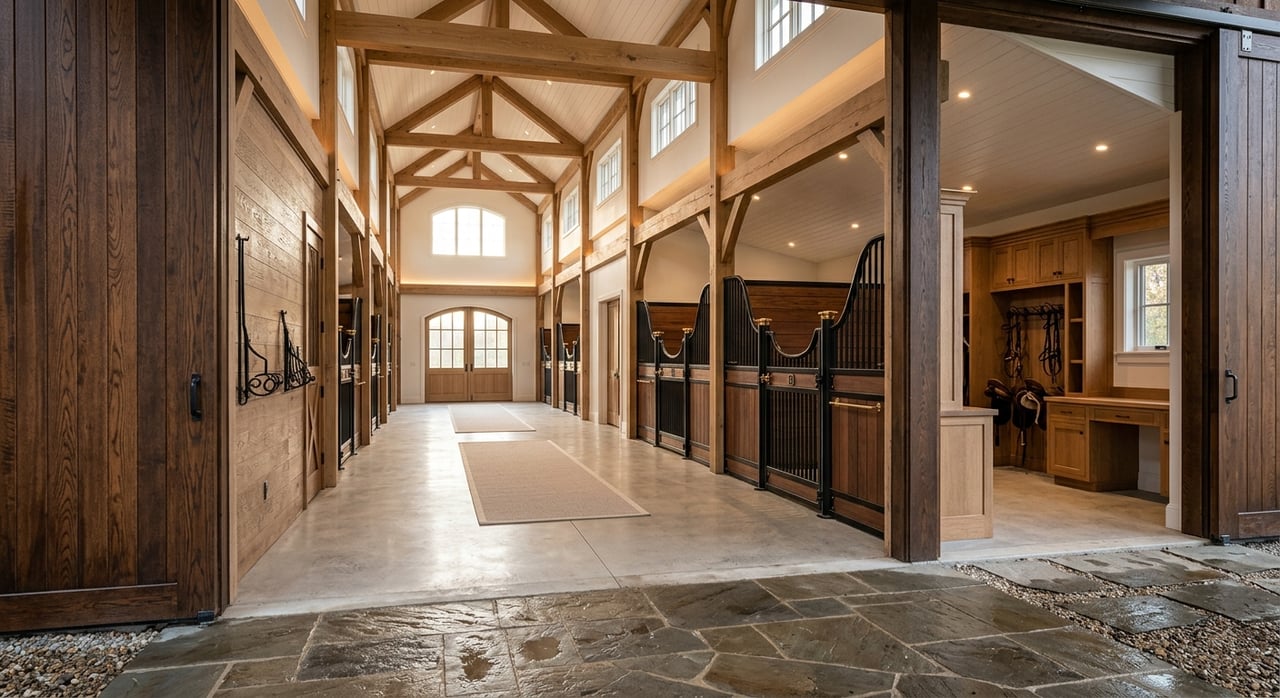
If you are dreaming about a horse property in Tewksbury, acreage alone will not tell you whether a home truly fits your plans. A parcel can look perfect online and still fall short when you dig into zoning, trail access, septic capacity, or where a barn can actually sit. This guide will help you focus on the details that matter most so you can evaluate equestrian and country properties in Tewksbury Township with more clarity and confidence. Let’s dive in.
Why Tewksbury appeals to horse buyers
Tewksbury has long been a natural fit for buyers who want a country setting with room for horses and rural living. The township’s farmland plan reported that about 57% of its 19,789 acres qualified for farmland assessment as of 2016, and 62 equine acres were reported in 2015. That tells you horses are part of the local land-use picture, not an unusual exception.
The local development code also defines agriculture broadly. It includes horses, ponies, mules, and related activities such as breeding, boarding, raising, rehabilitating, training, and grazing. The code even defines an equestrian trail, which is a good reminder that an equestrian property is about more than open land. It is about land that can function for your day-to-day routine.
Look beyond total acreage
A common mistake is assuming that more acres automatically means a better horse property. In Tewksbury, the better question is how much of that land is actually usable for pasture, turnout, structures, and safe access. Wooded areas, steep slopes, wetlands, and awkward lot layout can all reduce what you can realistically do with the property.
The township’s zoning framework also reflects a preservation-minded approach in rural districts like Highlands, Lamington, Farmland Preservation, and Piedmont. Cluster development and lot-size averaging can affect how a tract is configured. That means two properties with similar acreage may offer very different real-world value for horse or country use.
Understand horse-keeping basics
For buyers planning to keep horses at home, zoning details matter early. The current zoning compilation states that horse keeping on farms or single-family residential lots requires a 3-acre minimum lot size. It also allows 2 horses on the first 3 acres and 1 additional acre for each additional horse.
Those rules give you a starting point, but they are only part of the picture. You still need enough practical space for paddocks, circulation, storage, and daily handling. A lot may meet a minimum acreage rule on paper and still feel too tight once you map out the barn, driveway, fencing, and turnout areas.
Check barn and manure setbacks
Setbacks are one of the most important details to verify before making an offer. The same zoning compilation says barns and stables must be set back 100 feet from a street line or lot line, with a limited side-yard or rear-yard exception if there are at least 140 feet between the barn and nearby dwellings. Manure piles must be set back 150 feet from neighboring dwellings.
These distances have a direct impact on how a property can function. If the buildable or usable area is small, you may not have enough room to place structures where you want them. This is especially important if you are buying vacant land, planning improvements, or hoping to expand an existing setup later.
Prioritize usable site features
When you tour country properties in Tewksbury, it helps to look at the site like an operator, not just a buyer. A beautiful house and scenic views are valuable, but so is a layout that works on a rainy day, a winter morning, or when a trailer needs to turn around.
A strong checklist often includes:
- Usable pasture instead of mostly wooded acreage
- Safe fencing and gates for handling horses
- Space for a barn or run-in shed with proper setbacks
- Room for manure management away from wells and neighbors
- Adequate driveway width and turning space for trailers, hay delivery, and emergency access
- Logical circulation between the house, barn, paddocks, and parking areas
These practical features can have just as much impact on daily life as the home itself.
Review zoning and environmental constraints
Before you commit to a property, take a close look at constraints that may limit future plans. Tewksbury’s zoning permit application asks whether a property contains wetlands, steep slopes, stream encroachment areas, flood hazard areas, or conservation easements. It also requires a New Jersey-licensed land survey showing improvements, driveways, and proposed structures with setbacks.
This is a key part of due diligence because restrictions are not always obvious during a showing. A field may look open and usable, but environmental regulations or easements could affect where you can build, grade, or install improvements. In a rural market like Tewksbury, those details can shape the long-term value of the property.
Know the permit process
Tewksbury’s zoning permit process gives buyers a useful preview of what the township expects. The application notes that other approvals may also be needed, including county board of health review, and states that approval or denial is generally issued within 10 business days.
That does not mean every project is simple. It means you should enter the process with a clear plan, an accurate survey, and realistic expectations. If you are considering adding a barn, changing access, or improving a site near water or steep terrain, early research can save time and money.
Pay close attention to septic and wells
On country properties, septic and well systems deserve serious attention. NJDEP recommends a septic inspection before purchase when a property is served by septic, and its homeowner guidance notes that inspections can help determine whether the system will support long-term needs and future additions.
Well testing is also critical. Under the New Jersey Private Well Testing Act, sellers and buyers of properties with potable wells must test untreated groundwater for up to 43 parameters before title closing. Hunterdon County’s Health Department also maintains septic, well, and Private Well Testing Act records and performs septic design review, installation inspections, certification, and complaint investigations.
For buyers, this matters because water and wastewater systems affect everyday use, future expansion, and peace of mind. If you are considering horses, a barn, or even a home addition, you want to understand what the existing systems can support.
Consider commercial equine use early
If you plan to do more than keep personal horses, your analysis may change. Tewksbury’s development code includes horse boarding and training within its definition of agriculture. New Jersey’s Right to Farm Program may also protect eligible commercial farms from nuisance actions and overly restrictive municipal regulation, with disputes handled through the County Agriculture Development Board or the State Agriculture Development Committee.
According to the New Jersey Department of Agriculture, a commercial farm generally must be larger than five acres and produce at least $2,500 annually to qualify, while smaller farms face a higher production threshold. If your goals include boarding, training, or another farm-based equine business, it is wise to clarify that path early in your property search.
Verify trail access in real life
Trail access is one of Tewksbury’s biggest lifestyle advantages, but it should never be assumed. Hunterdon County’s Horseback Riding Reference Guide lists Cold Brook Preserve in Tewksbury Township as offering about 2 miles of riding on farm roads adjacent to fields, with parking on Route 517 just north of Oldwick.
The county also notes that horseback riding is limited to designated areas in county parks, and horse trailer parking is not available at every horse-trail location. In other words, being near trails is not the same as having easy ride-out access from your property.
Local organizations reinforce how important horses are to the township’s identity. The Tewksbury Trail Association says it maintains and marks a township-wide trail network and has grown to more than 250 members. The township’s Equestrian Committee says Tewksbury has over 100 miles of trails and reminds drivers to observe the 25 mph speed limit when horses are present.
Questions to ask before an offer
When you find a property you like, slow down and test the fit from every angle. A thoughtful review now can help you avoid buying a parcel that works as a country home but not as an equestrian one.
Ask questions like these:
- What zoning district and overlay areas apply to the property?
- Does the lot support the horse count or small-farm use you want?
- How much of the land is truly usable for pasture, turnout, structures, and access?
- Are there wetlands, flood hazard areas, steep slopes, stream encroachments, or conservation easements?
- Is there room for barns, manure storage, trailers, and safe circulation?
- Are the septic and well systems adequate for current and future needs?
- Is trail access practical from the property, or will you still need to trailer out?
A smart Tewksbury buying strategy
The best equestrian and country properties in Tewksbury usually combine several strengths at once. You want the right zoning, enough usable land, workable drainage and water conditions, practical access for trailers and deliveries, and a trail setup that fits how you actually ride or live.
That is why buying in this niche takes more than a quick online search. You need local market knowledge, careful property screening, and a clear plan for evaluating each parcel before you move forward. If you are exploring equestrian or country homes in Tewksbury, Hope Salamone Homes can help you assess the details that matter and navigate your search with confidence.
FAQs
What makes a property in Tewksbury suitable for horses?
- A suitable Tewksbury property should offer enough usable land for horses, turnout, structures, manure management, and trailer access, not just enough acreage on paper.
How many horses can you keep on a Tewksbury residential property?
- The zoning compilation states that horse keeping requires a 3-acre minimum lot size, allows 2 horses on the first 3 acres, and 1 additional acre for each additional horse.
What setbacks apply to barns and manure areas in Tewksbury?
- Barns and stables must generally be set back 100 feet from a street line or lot line, and manure piles must be at least 150 feet from neighboring dwellings.
Why are septic and well systems important for country properties in Tewksbury?
- Many rural properties rely on private septic and well systems, so inspections and required testing can help you understand capacity, water quality, and long-term suitability before closing.
Does every Tewksbury horse property have direct trail access?
- No. Trail access should be verified carefully because proximity to trails does not always mean you can ride directly from the property or park a trailer nearby.
What should buyers review before making an offer on a Tewksbury equestrian property?
- Buyers should review zoning, environmental constraints, survey details, septic and well records, usable acreage, structure setbacks, and how trail access works in real life.